

How Foreigners Can Buy Property in Greece: A Practical Guide
Buying property in Greece as a foreigner is generally possible for international buyers who want a holiday home, permanent base, rental investment, retirement property, or real estate connected to a Greek residency strategy. From apartments in Athens and Thessaloniki to coastal homes, island villas, and renovation projects, Greece offers a broad range of property options.
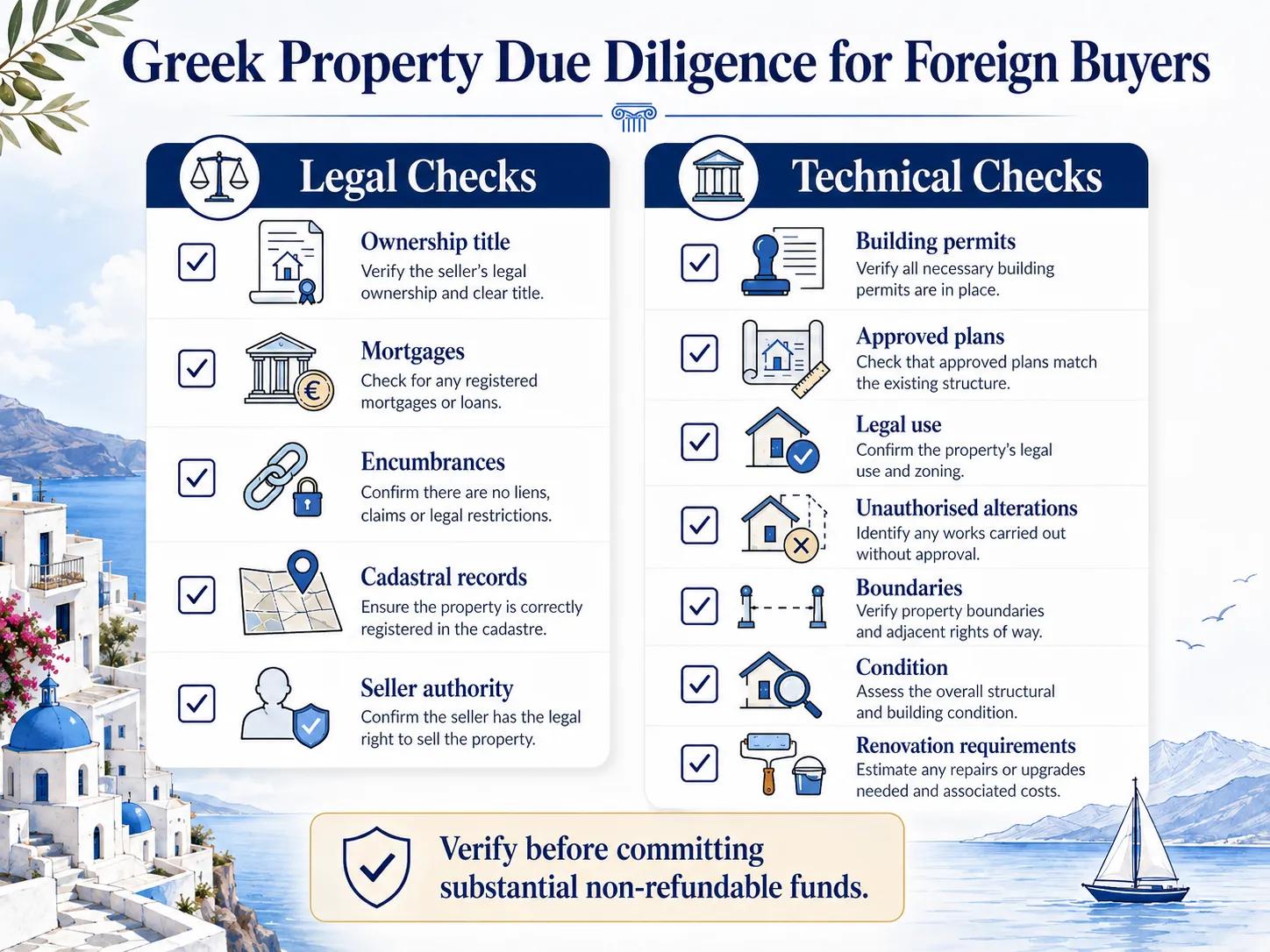
The purchasing process is manageable, but foreign buyers should understand the legal, tax, and technical requirements before committing funds. Obtaining a Greek tax number, checking ownership records, reviewing planning compliance, calculating transaction costs, and registering the final deed are all important parts of a secure purchase.
Can a Foreigner Buy Property in Greece?
Foreign nationals can generally purchase and own property in Greece. In most cases, you do not need Greek citizenship or an existing Greek residence permit simply to become a property owner.
However, buying real estate and obtaining the right to live in Greece are two different legal matters.
A foreign buyer can own property without automatically becoming a Greek resident. Non-EU nationals who want to combine a property purchase with a residency application must therefore confirm whether their selected property meets the relevant immigration requirements.
Investors considering the Greece Golden Visa program should check eligibility before signing a binding purchase agreement.

How the Property Purchase Process Works in Greece
A Greek property transaction usually involves several stages. Understanding the sequence before starting a property search can make the process much easier.
Obtain Your Greek AFM
The AFM should normally be arranged early in the purchasing process.
Foreign property buyers need this number to interact with the Greek tax system and complete the required procedures associated with a real estate acquisition.
Leaving this step until the end can create unnecessary delays once a suitable property has already been identified.
Find a Suitable Property
The Greek property market offers a wide variety of opportunities.
Foreign buyers may consider:
Residential apartments
Detached homes
Villas
Coastal properties
Urban investment units
Land
Commercial spaces
Renovation projects
Listed buildings
Properties undergoing legal conversion to residential use
Investors interested in residency-linked real estate can also explore available Greece Golden Visa properties, but each property should still be independently reviewed for legal and immigration eligibility.
An advertised purchase price alone does not prove that a property qualifies for a residence permit.

Registering the Property After Completion
Signing the purchase deed is not the final administrative step.
The acquisition must be properly registered with the relevant Greek cadastral system so that the transfer of ownership is formally recorded.
Buyers should make sure this registration is completed and obtain confirmation that the new ownership has been correctly entered.
Proper registration is essential because it creates the official property record supporting the buyer's ownership rights.
Ongoing Property Taxes for Foreign Owners
Purchasing property also creates responsibilities after the transaction is complete.
Greek real estate owners generally have property-reporting obligations and may be liable for ENFIA, Greece's annual property ownership tax.
Foreign owners who rent out their property may also need to declare rental income in Greece and comply with additional tax obligations.
Before buying, investors should therefore estimate both:
One-time acquisition costs
Recurring annual ownership costs
This provides a more realistic picture of the property's long-term financial requirements.

Popular Locations for Foreign Property Buyers
Different parts of Greece suit different buyer profiles.
Final Thoughts
Buying property in Greece as a foreigner can be a straightforward process when buyers prepare carefully and use appropriate legal and technical support.
Start by clarifying your objectives and arranging an AFM. Complete legal and technical checks before committing significant funds, calculate the total acquisition cost, review the final notarial deed carefully, and make sure the ownership transfer is properly registered.
Buyers considering residency should also assess immigration requirements before selecting the property so that their real estate and residency strategies remain aligned.
For investors who want to compare Greece with other international residence and citizenship opportunities, Level Immigration provides professional guidance on residency and investment migration programs in multiple countries.
Frequently Asked Questions
Can Americans, British Citizens, and Other Foreigners Buy Property in Greece?
Yes. Foreign nationals can generally purchase Greek property, although individual transactions may require additional legal or administrative checks.
Do I Need to Live in Greece to Own Property?
No. You can generally own Greek property while remaining resident in another country.
Is an AFM Required to Buy Greek Property?
Yes. A Greek tax identification number is required to complete the relevant tax and property-purchase procedures.
What Other Costs Should I Expect Besides the Purchase Price?
Foreign buyers should budget for applicable transfer taxes, legal fees, notary costs, cadastral registration, engineering checks, agency fees where relevant, translation costs, and possible renovation expenses.
Does Owning Property Give Me Permanent Residency?
No. Ordinary property ownership does not automatically provide Greek residency. A buyer seeking residence through investment must satisfy the specific Golden Visa requirements.
Can a €250,000 Property Qualify for the Golden Visa?
Potentially, but only when it falls within a qualifying €250,000 property category and meets the applicable legal conditions. The threshold does not apply generally to every property in Greece.
Can Foreign Buyers Purchase Property Remotely?
Some stages may be handled through an authorized representative using a properly drafted power of attorney, depending on the transaction.
Should I Conduct Legal Due Diligence Before Paying a Deposit?
Yes. Legal and technical checks should ideally be completed, or appropriate protections agreed, before a buyer commits substantial non-refundable funds.