

Relocating to Greece in 2026: Essential Guide for Expats and New Residents
Relocating to Greece can offer a distinctive combination of Mediterranean living, European connectivity, historic cities, coastal communities and several residence options for foreign nationals. For new residents, however, settling successfully in Greece requires more than selecting an attractive neighbourhood or island.
Immigration status, taxation, accommodation, healthcare, employment rights, banking and everyday administration can all affect how smoothly the move goes. Planning these areas before arrival can prevent delays and unexpected costs later.
This guide explains the key considerations for expats and international residents preparing to establish a life in Greece in 2026.
Understanding Your Greece Residence Options
The first major issue to resolve is whether you have the legal right to live in Greece and which residence category applies to you.
EU and EEA nationals benefit from European free-movement rights, although additional registration requirements may apply when establishing longer-term residence.
For third-country nationals, the correct visa or residence permit depends on the purpose of the move. Greece provides different immigration routes for circumstances including employment, professional activity, family reunification and investment.
The Greek Ministry of Migration and Asylum provides official information about residence categories and supporting documentation.
Investors who want to combine property or capital investment with European residence may also examine the greece golden visa 2026 framework.
The important point is to confirm the appropriate immigration route before making major financial commitments.
Immigration Residence and Tax Residence Are Different
One of the most common mistakes international residents make is treating immigration status and tax residence as the same thing.
They are not.
A residence permit determines whether you are legally permitted to reside in Greece under a particular immigration category. Tax residence determines how Greece may treat your income and tax obligations.
You can therefore hold a residence permit without automatically becoming a Greek tax resident.
Similarly, spending significant time in Greece can have tax consequences even when taxation was not the main reason for your move.
These two areas should always be reviewed independently.

Obtaining an AFM in Greece
An AFM is Greece's Tax Identification Number and is an important part of establishing financial and administrative connections in the country.
Foreign residents commonly encounter the AFM when dealing with:
Property transactions
Greek taxation
Employment
Business activities
Banking
Certain contracts
Government administration
The Greek government provides an official AFM application service for individuals.
Depending on your situation, obtaining an AFM may be one of the earliest administrative steps worth arranging.
New residents may subsequently need access to Greece's digital tax systems for declarations and other administrative functions.
Should New Expats Rent or Buy Property?
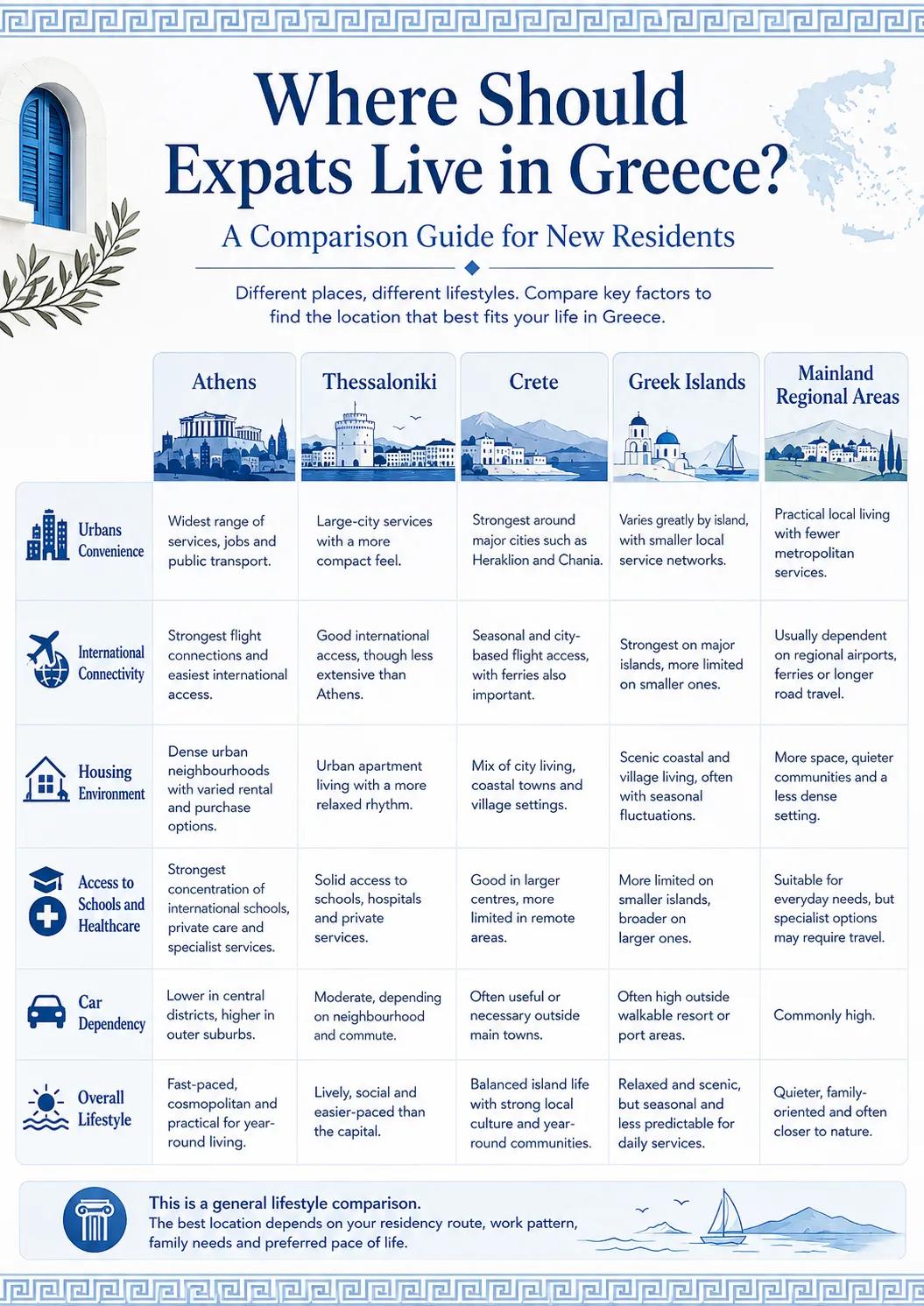
For many newcomers, renting first is the safer way to understand an area before making a long-term commitment.
Living somewhere for several months reveals things that property viewings rarely show, such as:
Morning traffic
Parking conditions
Local noise
Winter temperatures
Public transport reliability
Nearby supermarkets
Access to hospitals
Seasonal tourism
Building maintenance
Buying can make sense when you already know where you want to establish yourself or when property forms part of a broader investment strategy.
Foreign buyers should complete proper legal and technical due diligence before purchasing.
Checks may include:
Ownership and title verification
Land Registry or Cadastre records
Building permits
Planning compliance
Outstanding obligations
Renovation requirements
Common building expenses
Property taxation
Restrictions affecting intended use
Anyone purchasing specifically for immigration purposes should also confirm that the property satisfies the relevant program conditions before proceeding.
Investors researching eligible opportunities can review greece golden visa properties when comparing available investment-related real estate.

Tax Considerations for Foreign Residents
Tax planning should ideally begin before you complete the relocation.
Greece considers factors such as permanent residence, habitual abode, centre of vital interests and physical presence when determining tax residence.
The widely discussed 183-day threshold can also become relevant depending on the circumstances.
The Independent Authority for Public Revenue provides official guidance for residents and non-residents.
Issues worth reviewing before moving include:
How many days you expect to spend in Greece
Your existing country of tax residence
Overseas employment income
Pension income
Rental income
Investment income
Business ownership
Property holdings
Double-taxation agreements
Greek tax residents may have obligations relating to worldwide income, while non-residents are generally treated differently for Greek-source income.
Cross-border taxation can become complicated quickly, so international residents with substantial income or assets should obtain personalised tax advice.
Healthcare Options for Expats
Greece operates both public and private healthcare systems.
The type of public coverage available to you can depend on employment, social-security participation, immigration status, nationality and other circumstances.
EU citizens should also understand that healthcare arrangements designed for temporary travel are not necessarily the same as healthcare arrangements for permanent relocation.
The EU's official healthcare guidance for citizens living abroad explains some of the relevant cross-border considerations.
Before relocating, check:
Your current insurance policy
Eligibility for public healthcare
Private insurance options
Coverage for dependants
Prescription medication needs
Specialist availability
Emergency care
Nearby hospitals
Residents choosing smaller islands or remote mainland areas should pay particular attention to access to specialist treatment and major hospitals.
